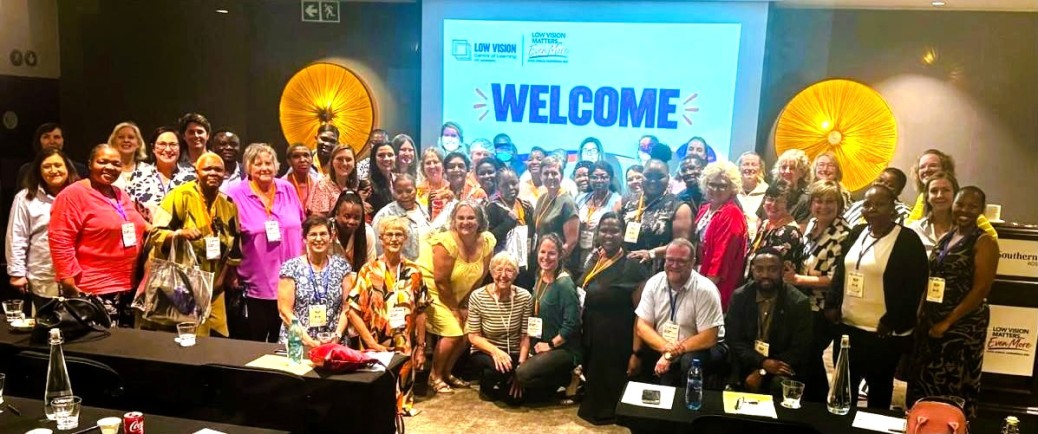
Three days of learning, practical skills and multidisciplinary collaboration highlighted how knowledge can translate into better outcomes for people living with visual impairment.
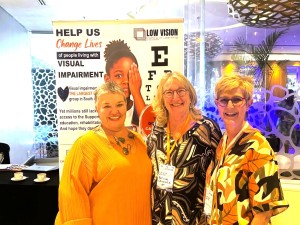
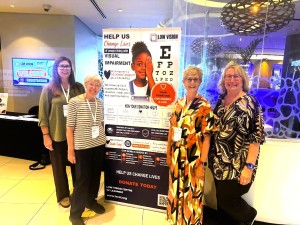
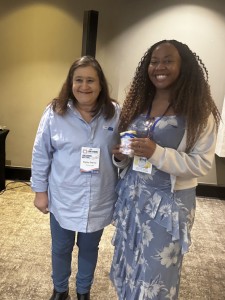
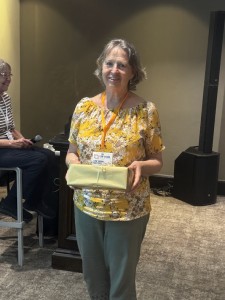
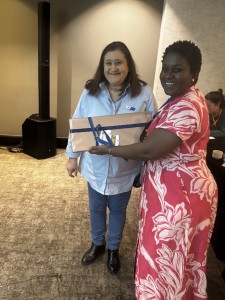
Who contributed more to the success of The Low Vision Matters Even More 2026 conference, hosted by the Low Vision Centre of Learning (LVCOL) in conjunction with the University of Alabama at Birmingham? The outstanding presenters who shared their expertise, or the professionals from different disciplines who engaged, questioned, explored and collaborated over three days of learning?
Held from 19–21 September 2026, the conference brought together three interconnected themes: diabetes and its impact on vision, practical low vision assessment and rehabilitation, and the recognition and management of neurological vision loss. Together, these themes reinforced a central message: effective vision care must extend beyond diagnosis to address the realities of everyday life.
Day 1: Diabetes and eye health — from awareness to action
Dr Patrick Ngassa Piotie opened the conference with Diabetes in South Africa: From Crisis to Action – The Johannesburg Declaration. His presentation highlighted the urgent need for stronger prevention, earlier detection, appropriate treatment and integrated diabetes care, including greater attention to the complications that threaten vision.
Karen Denton explored the relationship between lifestyle, diabetes and eye health, alongside the evidence surrounding GLP-1 agonists. The discussion highlighted the importance of understanding diabetes in its broader health context and recognising the implications for long-term eye health.
Adding a powerful personal perspective, Siobhan Kotze shared her experience of living with type 1 diabetes for 42 years. Her contribution brought the realities of living with a chronic condition into focus and enriched discussions about the changing approaches to diabetes care.
Beth Barstow provided an insightful explanation of important diabetes care guidelines, reinforcing the value of early detection, accessible patient education and coordinated care that addresses both general health and vision.
Dr Joanne Miller concluded the day by examining the ophthalmologist’s role in preventing and treating the different forms of diabetic retinopathy.
The day’s message was clear: protecting vision requires more than treating established eye disease. Prevention, timely screening, informed patients and coordinated healthcare must work together.
Day 2: Practical approaches to low vision
Day 2 shifted the focus from disease to daily living, exploring practical ways to help people with low vision achieve their goals and maintain independence.
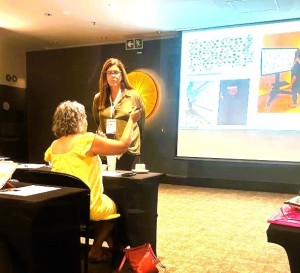
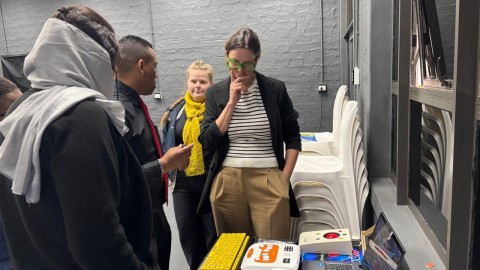
Two complementary learning tracks addressed multidisciplinary rehabilitation and clinical vision assessment. Topics included functional visual assessment, goal setting, optical and assistive technologies, reading strategies, fall prevention and maintaining employment despite vision loss.
A particularly relevant theme was rehabilitation on a limited budget. In South Africa, where access to specialised equipment and services can be restricted by cost and geography, finding affordable, appropriate solutions is essential. Effective rehabilitation does not always depend on expensive technology; it begins with understanding the individual, identifying priorities and making the best possible use of available resources.
The sessions reinforced an important principle: visual acuity alone cannot tell us how well someone functions in everyday life. A person may achieve a particular level of vision on a clinical chart yet struggle to read correspondence, navigate unfamiliar environments, work safely or manage household tasks.
Successful low vision care therefore requires practitioners to look beyond test results and ask a more meaningful question: What does this person need to be able to do, and how can we help them do it?
Day 3: Neurological vision loss — looking beyond the eyes
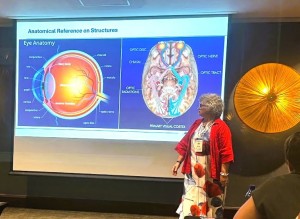
The final day explored the complex relationship between neurological function and vision, emphasising early recognition, appropriate assessment and timely intervention.
Dr Melodie de Jager’s presentation in the dark examined the developing brain and vision, including the role of early reflexes in nervous system maturation, sensory integration, postural control and visual development. Her presentation highlighted the interconnected nature of sensory and neurological development.
Beth Barstow addressed hemianopsia, a loss of vision affecting one side of the visual field. The effects can extend well beyond seeing less on one side, influencing reading, mobility, spatial awareness and everyday safety. Understanding both the nature of the visual field deficit and its functional consequences is essential when planning appropriate rehabilitation and support.
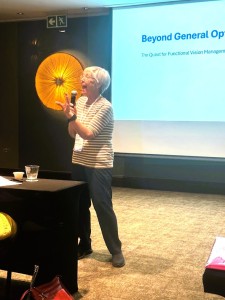
Deidré de Jongh challenged conventional thinking with Beyond General Optometry – The Quest for Functional Visual Integration. Her presentation explored why good visual acuity does not necessarily translate into effective visual processing or successful everyday function. It encouraged practitioners to consider the broader processes involved in interpreting and responding to visual information.
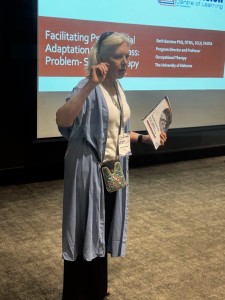
The programme concluded with Beth Barstow examining approaches to facilitating psychosocial adaptation to vision loss, reminding delegates that adjusting to changes in vision involves emotional and social challenges as well as practical ones.
Collectively, these sessions highlighted the importance of recognising the wider neurological, functional and emotional consequences of visual impairment. Particularly following neurological injury, or where developmental and perceptual difficulties are present, a visual complaint may be only one part of a more complex picture.
Early recognition, careful assessment and appropriate referral can make a meaningful difference, helping people access support that reflects their actual needs rather than simply their measured visual acuity.
Collaboration that makes a difference
One message resonated throughout all three days: no single profession can meet every need associated with vision loss.
Optometrists, ophthalmologists, occupational therapists, orientation and mobility practitioners, nurses, educators and rehabilitation professionals each bring valuable expertise. When these perspectives are combined, care becomes more responsive to the whole person — their clinical needs, daily challenges, personal goals and aspirations.
The conference also demonstrated the value of bringing professionals together to share knowledge, question established assumptions and explore practical solutions. This exchange is particularly important in settings where resources may be limited and innovative, affordable approaches can make a substantial difference.
For the Low Vision Centre of Learning, the event represented an important opportunity to strengthen professional connections, support continuing education and promote accessible, practical approaches to vision care.
Ultimately, the success of low vision education cannot be measured by the information presented alone. Its true value lies in what professionals take back to their workplaces, how they adapt their clinical practice and whether people living with visual impairment experience better support as a result.
Low vision matters even more when knowledge becomes action — helping people maintain independence, participate more fully in their communities and enjoy the best possible quality of life.